About Karachi
Karachi city is spread over 3,530 km2 (1,360 sq mi) in area. It is locally known as the "City of Lights" for its liveliness, and the "City of the Quaid", having been the birth and burial place of Quaid-e-Azam (Muhammad Ali Jinnah), the founder of Pakistan, who also made the city his home after Pakistan's independence.
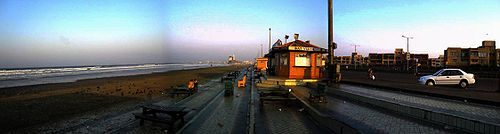
Clifton Beach Karachi
Karachi is the largest city, main seaport and the financial capital of Pakistan, and the capital of the province of Sindh. It is the 3rd largest city in the world by population and 20th largest metropolitan area in the world, in terms of metropolitan population. It is Pakistan's premier centre of banking, industry, and trade. Karachi is also home to Pakistan's largest corporations, including those that are involved in textiles, shipping, automotive industry, entertainment, the arts, fashion, advertising, publishing, software development and medical research. The city is also a major hub of higher education in South Asia and the wider Islamic World. Karachi has been ranked as a Beta world city, as of 2008.
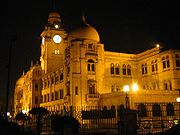
Karachi Municipal Corporation
Culture:
Karachi is home to some of Pakistan's important cultural institutions. The National Academy of Performing Arts, located in the newly renovated Hindu Gymkhana offers a two year diploma course in performing arts that include classical music and contemporary theatre. The All Pakistan Music Conference, linked to the 45-year old similar institution in Lahore, has been holding its Annual Music Festival since its inception in 2004. The National Arts Council (Koocha-e-Saqafat) also has musical performances and Mushaira (poetry recitations). The Kara Film Festival organized annually showcases independent Pakistani and international films and documentaries.
Karachi has many museums including the Mohatta Palace that regularly has exhibitions as well as the National Museum of Pakistan. Karachi Expo Centre hosts many regional and international exhibitions
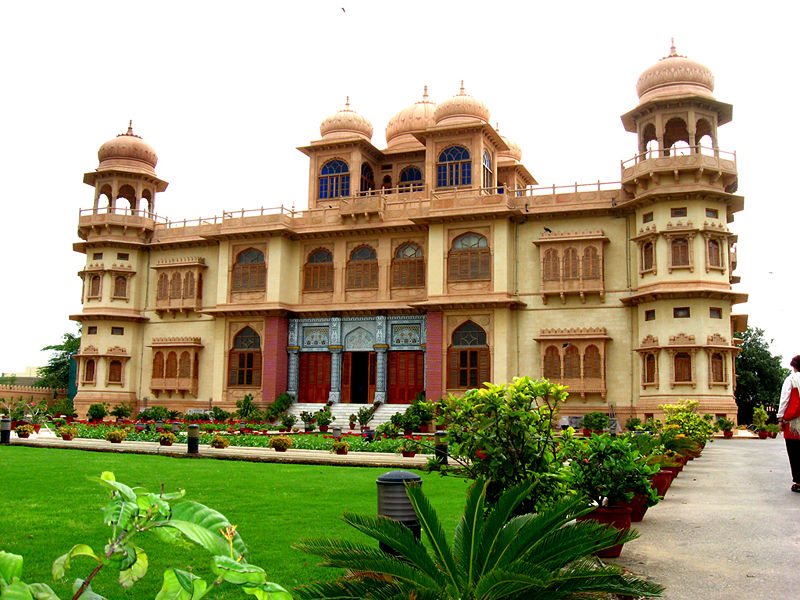
Mohatta Palace
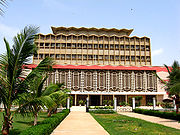
National Museum of Pakistan
The everyday lifestyle of Karachi differs substantially from that of other Pakistani cities/towns. The culture of Karachi is characterized by the blending of South Asian, Middle Eastern, Central Asian and Western influences, as well as the status of the city as a major international business centre. Karachi also hosts the largest middle class stratum of the country.
Weather:
Karachi features an arid climate, albeit a more moderate version
of this climate. Winters are mild and the summers are hot, however
the proximity to the sea maintains humidity levels at a
near-constant high and cool sea breezes relieve the heat of the
summer months. Due to high temperatures during the summer (ranging
from 30 to 44 degrees Celsius from April to August), the winter
months (November to February) 14-27 degree Celsius are generally
considered the best times to visit Karachi.
Currency:
1 US dollar = approximately 83 Pakistani Rupee